Plan Spoil And Aggregate Runs On Glasgow Jobs
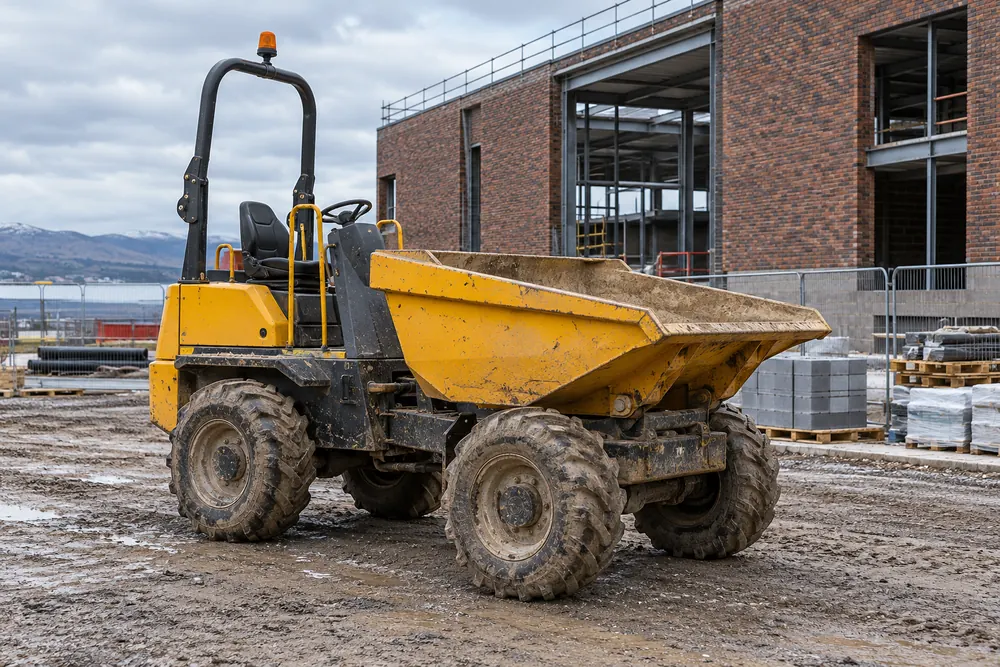
Dumper hire in Glasgow supports the movement of loose materials between excavation, storage and unloading points. A suitable machine helps connect the work sequence. Its payload and dimensions need to suit the excavator, the journey and the place where material will be tipped.
We take enquiries for commercial groundworks, drainage projects, industrial yard repairs and site preparation. For your Glasgow groundworks, identify the spoil, stone or other load the dumper will carry. Include the expected loading method and whether the route uses hardstanding, compacted fill or unmade ground.
A dumper is for moving material within an agreed operating environment. It does not replace a road haulage or waste disposal arrangement. If spoil must leave the premises, identify the separate loading and removal plan before selecting the site transport equipment.
Payload, Access And Tipping Arrangement
Payload selection should consider material density as well as volume. A full skip is not always a permissible load. The operator needs the proposed machine’s limits and instructions, rather than an assumption based on how much material physically fits.
Front-tip and swivel-tip arrangements serve different unloading positions. A restricted trench-side route may create a different requirement from an open stockpile area. Tell us about the tipping point and any edge protection or exclusion area so suitability can be reviewed.
Measure gateways, narrow passages and turns along the entire route. Include gradients, overhead obstructions and soft sections. The narrowest opening is only one constraint, since a loaded dumper needs safe movement, visibility and a suitable place to turn or tip.
For restricted areas, ask whether a compact or tracked category should be considered. Do not assume that changing the running gear resolves unstable ground. Route preparation and a site assessment remain necessary.
Dumper Safety And Commercial Site Duties
The HSE dumper guidance identifies overturning and collision risks. Site planning needs pedestrian separation, suitable routes and trained operators. The tipping location and its stability need attention as well as the travel route.
PUWER applies to hired dumpers as work equipment. Confirm that users receive appropriate information and training for the actual machine. Establish pre-use checks, defect reporting and a clear rule for taking unsafe equipment out of service.
Check the dumper’s operating manual for restraint use, protective structures and the limits that apply to your site route. A site-specific assessment must address slopes and excavation edges. Do not copy a route from another project simply because the dumper category is the same.
CDM 2015 duties also apply where the work is a construction project. Commercial clients and contractors should allocate traffic management responsibilities within the project arrangements. Explain how the dumper will interact with delivery vehicles and other plant before the hire begins.
How To Arrange Dumper Hire
First, send the site postcode, material description, intended dates and loading equipment. Include route width, gradients and the tipping arrangement. State who will operate the machine and whether the project has particular induction or delivery restrictions.
Next, review the proposed payload, machine dimensions and transport arrangements. Confirm the hire period, fuel policy, insurance requirements and what happens if work runs beyond the planned date. A written quotation should make the scope and exclusions clear.
At delivery, have a responsible site contact available and keep the unloading area controlled. Record condition and check the operating information before using the machine. The operator should be familiar with the controls and the arrangements for loading, travel and tipping.
During hire, keep loading and travel within the machine limits. If rain, excavation or changing site traffic makes the planned route unsafe, stop and reassess it. At completion, follow the agreed off-hire process and retain confirmation of the collection arrangement.
What Affects Dumper Hire Cost
Dumper category, payload, hire duration and transport influence the quotation. Fuel, cleaning, damage terms and any insurance arrangement also need checking. Ask whether the price includes VAT and whether waiting time or changes to collection have separate conditions.
Consider productivity alongside rate. A smaller dumper may fit the route but require more journeys, while a larger model may need ground preparation or a different unloading area. The most useful comparison is the complete arrangement for the work you need to carry out.
Pair the enquiry with digger hire if loading and excavation are part of the same project. For aggregate reinstatement, our compaction roller page explains the information needed for the next stage.
Dumper Hire Questions
Do I Need A Swivel-Tip Dumper?
A swivel-tip dumper may suit a project where material must be discharged to the side of the travel route. Describe the unloading position, available width and any nearby excavation. The appropriate tipping arrangement depends on the actual machine and site assessment.
It must not be used to work around an unsafe edge or unstable tipping area.
Can A Dumper Run On Soft Ground?
Dumper use on soft ground needs an assessment of bearing conditions, slopes and the loaded machine’s limits. Tell us about unmade routes and recent excavation before choosing equipment. A tracked option may be worth discussing, but it does not make unstable ground safe.
Route preparation, drainage and changes during the work still need supervision.