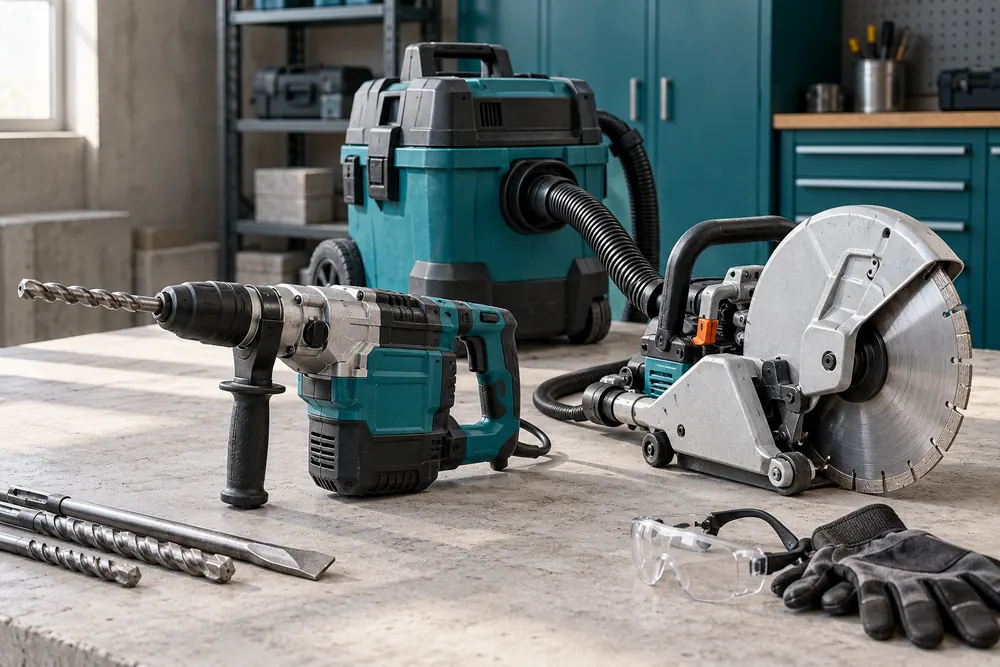
Tools Chosen For The Material
Tool hire in Glasgow gives contractors and facilities teams access to equipment for a defined job without committing to ownership. A rotary hammer for anchor holes, a breaker for slab removal and a saw for controlled cutting do different work, even when they appear on the same work order. Tell us what you are working on and the finish you need before specifying a machine.
We take enquiries for drilling, breaking, cutting, compaction and related site tools for business use. Describe the material thickness, the number of openings or fixings and whether the work area remains occupied. A fit-out in an operating office needs a different approach to a vacant warehouse strip-out.
List the fittings and consumables your Glasgow trade job needs alongside the tool itself. Confirm the drill shank, bit diameter, blade suitability, extraction connection and any transformer or extension requirements. A tool delivered without the correct consumables or compatible dust control may be unsuitable for the task.
When Hiring Makes Practical Sense
Hiring can suit short maintenance shutdowns, specialist operations outside your usual workload and temporary increases in site demand. It also helps when a contractor needs a different tool for a particular substrate. Compare the full hire arrangement with your work sequence rather than choosing solely by the shortest hire period.
For a school or commercial landlord, the enquiry should describe access restrictions and any separation from building users. For a workshop, explain whether production continues nearby. These details help identify questions about noise, dust, exhaust fumes, power isolation and safe movement through the building.
Safety And Work Equipment Duties
The Provision and Use of Work Equipment Regulations 1998, known as PUWER, apply to work equipment, including hired tools. Suitability, maintenance, information and training matter. Your business must check that the equipment and the person using it are appropriate for the job.
See the HSE PUWER overview.
For cutting and drilling, assess exposure under the Control of Substances Hazardous to Health Regulations 2002. Specify suitable dust control rather than treating it as an optional extra. The HSE construction dust guidance explains the need to assess, control and review exposure.
Vibrating tools also need an exposure assessment under the Control of Vibration at Work Regulations 2005. Ask for relevant equipment information and plan how it will be used. PPE does not replace selecting an appropriate method and controlling exposure at source.
From Enquiry To Return
First, send the job description, commercial site postcode, dates and required accessories. Include any equipment specification already agreed by your supervisor. If you are unsure which tool category is suitable, describe the outcome rather than guessing a model.
Next, review the proposed equipment, hire period, consumables and delivery or collection arrangements. Confirm what is supplied and what your team must provide. Check compatibility with the actual electrical supply, including any transformer, distribution or extension equipment.
At handover, inspect the tool and confirm operating instructions, guards and accessory fitment before work begins. Stop using equipment that develops a defect and follow the agreed reporting route. At the end, agree the off-hire procedure and return condition rather than assuming a planned finish automatically closes the hire.
What Affects Tool Hire Cost
Tool category, hire duration, specialist accessories and consumable wear all affect the quotation. For a Glasgow delivery, check whether the quote lists outward transport and the return journey separately. A cutting blade, drill bit or abrasive can be charged differently from the machine, so ask how wear and damage are assessed.
Ask whether the quote includes VAT and whether any deposit, damage waiver or insurance requirement applies. Compare the same equipment package across quotes. A lower base hire charge can be less useful if the required extraction, power conversion or transport is excluded.
Combine related tasks when practical, but do not extend exposure or overload your work programme merely to reduce hire days. For larger groundworks packages, see our plant hire service. Use the enquiry form to send a written list of the tools and supporting equipment your team needs.
Tool Hire Questions
Can I Hire Dust Extraction With A Tool?
Dust extraction for tool hire should be specified alongside the machine and the material being worked. Tell us whether you are drilling, chasing, cutting or breaking and whether the space is occupied. Ask for a compatible extraction package and suitable consumables, then have your supervisor check the proposed controls against the task assessment.
What Power Supply Does A Hired Tool Need?
A hired tool needs a power supply that matches its rating and intended operating environment. State what electrical supply is available and whether a transformer or distribution equipment is needed. Confirm cable routing, connections and protection before work starts.
Battery equipment can be discussed where suitable, with charging arrangements and spare batteries included in the enquiry.